
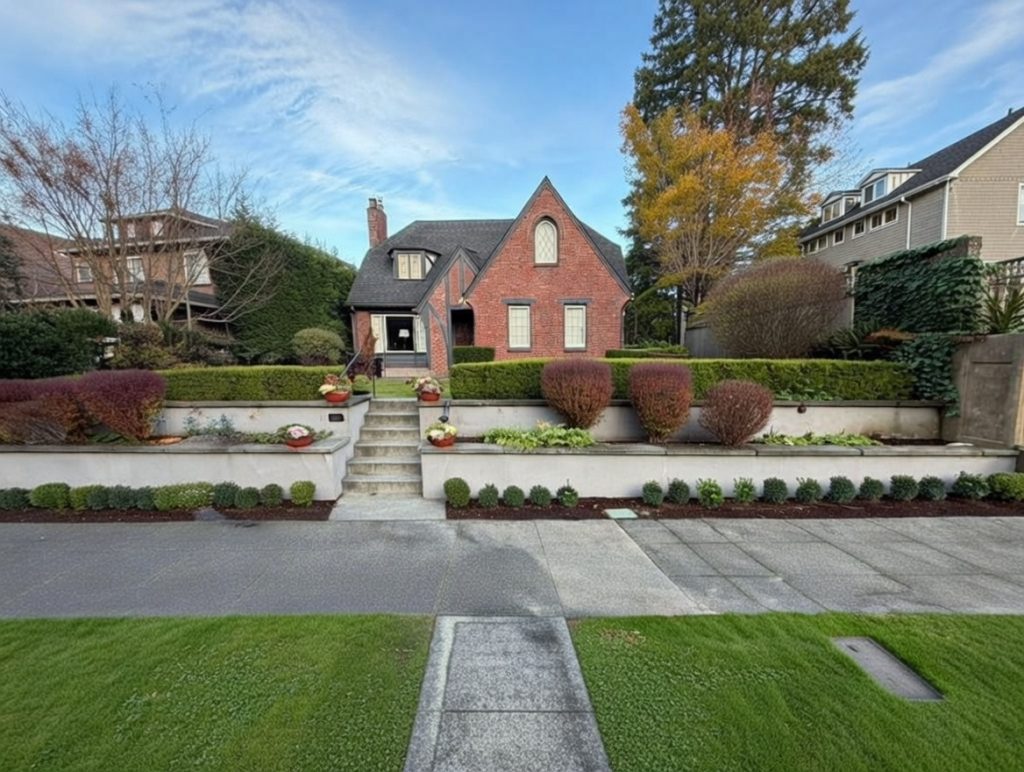
Right now, in mid-September, your irrigation system is probably still running on its summer schedule, watering frequently, and maybe even daily. But Seattle’s dry season is ending, and within a few weeks, regular fall rains will begin changing how much water your landscape actually needs.
That shift is where problems can start. If you keep watering too heavily, saturated soil can contribute to root problems and unnecessary water use. But if you do not adjust the system at all, existing irrigation and drainage issues can go unnoticed.
That is why September is such an important transition period. We have spent the last 30 years managing Seattle landscapes through this seasonal change, and we know how the right adjustments now can help prevent bigger problems later.
Why September Is the Critical Irrigation Transition Month
Seattle’s irrigation needs change quickly this time of year. June through August are typically the driest months. September, on the other hand, can still bring dry stretches, but rainfall becomes more consistent in October and beyond.
That overlap is what makes September easy to get wrong. A summer irrigation schedule may continue watering a landscape that is already receiving natural rainfall. The result can be excess moisture around roots, greater fungal pressure, and nutrients being washed through the soil.
But stopping irrigation too early can also leave certain plants short on water during a late dry spell. That’s why instead of following a fixed calendar, September should be treated as a transition period. Check the weather, inspect your soil, and adjust the system as conditions change.
Understanding Seattle’s Drainage Challenges (Why Not All Yards Are Created Equal)
The PNW Soil Reality: Clay, Compaction, and Poor Drainage
The condition of the soil has a major influence on how your landscape handles rain. In areas such as West Seattle, Magnolia, Queen Anne, Wallingford, and lower Capitol Hill, heavier soils can hold water for longer and become compacted more easily.
When compacted or clay-heavy soil drains slowly, even normal rainfall can leave planting beds saturated. Puddles that remain for a day or more, yellowing plants, and soft soil are all signs that water is not moving through the ground properly.
Urban compaction creates another problem. Older neighborhoods such as Ballard, Fremont, and Laurelhurst can have compacted areas around foundations. When soil becomes heavily compacted, water has fewer places to infiltrate and roots have less usable space.
Improper Grading: When Your Landscape Slopes the Wrong Way
A properly graded landscape should move water toward appropriate drainage areas rather than allowing it to collect around the home. If runoff pools near the foundation, gathers in low spots, or flows through planting beds instead of dispersing, grading may be contributing to the problem.
This can happen over time as soil settles, but landscape renovations and new hardscaping can also change established drainage patterns.
Hardscape & Irrigation Interference: When Systems Work Against Each Other
Hard surfaces can also work against your irrigation and drainage system. Sprinklers may spray onto patios instead of planting beds, and downspouts may discharge directly into areas that already struggle to drain.
These problems are often hidden during summer because dry conditions allow excess water to disappear quickly. Fall rain exposes them through muddy runoff, erosion, and plants that begin declining in areas that stay wet.
The 4 Most Common Seattle Drainage Problems (And How to Spot Them Before Fall)
1. Standing Water & Persistent Puddles (aka “Boggy Patch Syndrome”)
If puddles remain for 24 hours or longer after rain, or soil stays spongy even when it has not recently rained, drainage is worth investigating. In parts of Magnolia, Queen Anne, Wallingford, and West Seattle, clay-heavy soil can make this especially noticeable.
Older commercial properties in Ballard and Fremont can also face similar problems because of long-term compaction. If you find any standing water, document where water collects and check the area after rainfall.
Depending on the cause, the solution could range from improving the soil to installing a French drain, bioswale, or other drainage system.
2. Root Rot & Plant Death in “Wet Zones”
A plant that repeatedly looks weak or yellow in one location while the same species thrives elsewhere may be dealing with excess moisture around the roots. Soft or mushy roots and a musty smell can also point to root problems.
Over-irrigation and poor drainage can be the possible cause. Roots need both water and air, and constantly saturated soil limits the conditions they need to function properly.
This can be a recurring issue around foundation plantings in older Laurelhurst, Madison Park, and University District properties, as well as HOA landscapes that use the same watering schedule across every planting bed.
To manage this, reduce unnecessary irrigation and check the soil. But if root damage is advanced, improving drainage and replacing plants with better-suited species may be necessary.
3. Erosion & Runoff (Water Moving Too Fast, Not Soaking In)
Not every drainage problem involves water moving too slowly. On sloped properties, water may move too quickly, carrying soil and mulch downhill instead of soaking into the landscape.
These problems can be common on sloped properties in Magnolia, Queen Anne, and Capitol Hill, as well as some newer construction areas. Look for muddy runoff, bare patches, displaced mulch, or hardscape edges being undermined by flowing water.
Watch how water moves during a light rain. Depending on the slope, solutions may include swales, rain gardens, bioswales, permeable surfaces, or plantings that help slow runoff.
4. Foundation Drainage Failures (When Landscape Grading Sends Water TO the House Instead of Away)
Water pooling beside the house, soil sloping toward the foundation, or downspouts discharging directly at the home deserves immediate attention. Wet basements and crawlspaces can be signs of ongoing water intrusion rather than a simple landscape issue.
Older Seattle homes may develop these problems as grading settles over time. Properties at the bottom of slopes can also receive runoff from surrounding areas.
Therefore, check how water moves after rain and whether the ground directs it away from the house. If drainage is affecting the foundation, call a professional rather than treating it as routine landscaping.
Your September Irrigation Audit: 5 Steps to Prepare for Fall
Step 1: Assess Your Current Irrigation System (What Do You Have?)
Start by finding out exactly what your system is doing. Check whether you use a manual timer or smart controller, how often each zone runs, and whether you use sprinklers, drip lines, or both.
If you do not know the current schedule, check the controller or app before making changes. Take a photo of the settings as a reference, especially if someone else normally manages the system.
Step 2: Test Soil Moisture Before Watering
Before changing the schedule, check the soil several inches below the surface. A loose, crumbly texture usually means the soil has usable moisture. Slightly moist soil that clumps loosely may still be fine. Wet soil that forms a compact ball indicates that more watering is unnecessary.
This simple test is more useful than watering based solely on the calendar. If the soil is staying moist without irrigation, your system may already be doing more work than the landscape needs.
Step 3: Review Grading & Drainage Patterns (Walk Your Property in Light Rain)
Light rain provides a useful opportunity to see what your landscape is actually doing. Watch where water collects, how it moves through planting beds, and whether runoff is heading toward the house or toward appropriate drainage areas.
Photograph recurring problem spots and note whether they are new or have been present for years. That information can make it much easier to determine whether the problem is irrigation, grading, soil compaction, or something more complex.
Step 4: Calculate Water Savings from Reducing Fall Watering
Reducing unnecessary irrigation has a financial benefit as well as a landscape benefit. For homeowners and especially HOAs, cutting back a summer watering schedule can reduce water use during a period when rainfall is increasingly doing the work naturally.
For larger properties, those savings can add up quickly. An irrigation adjustment is therefore not just a maintenance task; it can also be part of responsible property budgeting.
Step 5: Schedule Professional Irrigation Audit (Before Fall Rains Lock In the Season)
If the system is difficult to adjust or you are seeing uneven coverage, leaks, broken heads, or runoff, a professional audit can identify the problem before it becomes an expensive repair.
A proper assessment can include checking sprinkler heads, pressure, zone coverage, leaks, and controller settings. They can also recommend a fall and winter schedule suited to your landscape.
Seasonal Irrigation Adjustment: From Summer to Fall Schedule
The Simple Rule: Reduce, Monitor, Adjust
From mid to late September, start cutting back how often you water while checking the soil and the forecast. If rain is on the way, you may need to run your system less often or not at all.
As October and November bring more consistent rain, you’ll likely need much less supplemental irrigation across most of your landscape. As conditions stay wet, you can eventually shut off many zones entirely.
During winter, you generally won’t need routine irrigation because Seattle receives enough natural rainfall to keep most landscapes hydrated. A few plants in unusually exposed or windy locations may still need supplemental water, but these are exceptions.
And when spring brings drier conditions again, you can gradually increase irrigation as your landscape begins to need it.
Smart Irrigation Technology: Let Fall Rains Do the Work
If you want to make these seasonal adjustments easier, a smart irrigation controller can take some of the guesswork out of the process. A quality controller typically costs around $200-$500 as a one-time investment.
Rain sensors can skip watering after rainfall, and weather-based systems can adjust schedules as conditions change. Separate zones also let you give turf, shrubs, trees, and other plantings different watering schedules based on their needs.
That flexibility can also help reduce water bills. A smart controller may reduce watering costs by roughly $30-$80 per month during fall and winter and $50-$150 per month during summer.
For many properties, that puts the potential payback period at around 6-12 months. For HOAs and larger properties with more irrigation zones, higher water use can make the payback even faster, sometimes in under six months.
At Green Garden, we offer professional irrigation services to help you make these adjustments, from optimizing existing systems to installing smarter irrigation controls that better match your landscape’s needs.
Drainage Solutions: From DIY to Professional
Simple Solutions (DIY-friendly, $200-500)
For minor drainage problems, start with straightforward improvements. Adding 2-4 inches of compost to compacted soil can improve drainage over time.
Extending downspouts at least 6 feet away from the foundation can also keep roof runoff from collecting near the house. In addition, regularly raking leaves and debris from drainage areas helps keep water moving where it should.
Moderate Solutions (Professional help, $500-2,000)
When simple fixes are not enough, a more targeted approach may be needed. A bioswale can capture and filter runoff, while a rain garden provides a planted area designed to manage roof water.
Professionals can also regrade shallow swales to redirect surface runoff or install permeable hardscape in select areas to allow more water to soak into the ground instead of pooling on the surface.
Comprehensive Solutions (Professional, $2,000-10,000+)
More serious drainage problems may require a larger system designed around the property’s grading. A French drain uses perforated pipe and gravel to redirect water away from problem areas.
Major regrading can change the slope of the landscape, while subsurface drainage systems may be necessary when water continues to collect below the surface. For chronic water intrusion, a foundation drain tile system may provide a more comprehensive solution.
The important thing is that you do not have to jump straight to the most expensive option. At Green Garden, we can assess your property, identify where the water is coming from, and recommend the right level of drainage improvement for the problem.
HOAs & Commercial Properties: Scaled Approach for Fall Irrigation
Managed landscapes have another layer of complexity because they include multiple irrigation zones, different plant types, larger budgets, and more people responsible for maintenance.
That’s why September is a good time for property managers and HOA boards to audit every zone, establish a written fall schedule, and designate who is responsible for making adjustments.
For commercial properties, that efficiency can directly affect operating costs. Preventing overwatering, identifying failing equipment, and addressing drainage before emergencies develop can protect both the landscape and the maintenance budget.
When to Call a Professional (And Why Timing Matters)
You do not have to figure out every irrigation or drainage issue on your own. If you are unsure how to adjust your irrigation, deal with standing water, or plan drainage improvements, having a professional assess the property can help you address the issue before it becomes more difficult to manage.
September provides a good opportunity to make those changes before consistent rainfall arrives. A system audit or drainage assessment now gives you time to correct problems.
During a FREE LANDSCAPE CONSULTATION, our specialists will assess your irrigation, drainage, and seasonal landscape needs and provide practical recommendations based on your property and Seattle’s climate.
The Green Garden Approach: Proactive Seasonal Care
At Green Garden, we do not treat irrigation as a system that is turned on for summer and forgotten until next year. Our assigned crew leads monitor properties over time and adjust care based on what they see.
That consistency helps us catch inefficient watering, drainage issues, and other changes before they become larger problems. After 30 years managing Seattle landscapes, we have learned that good preparation is usually simpler and less expensive than emergency correction.
Your Next Step: Free Landscape Consultation & Irrigation Assessment
If you are concerned about how your property will handle Seattle’s fall and winter rains, now is the time to have your irrigation and drainage checked.
Call 206-930-2699 or email contact@gglandscaping.info to schedule a FREE LANDSCAPE CONSULTATION and irrigation assessment.
Green Garden serves Seattle and King County, including Ballard, Queen Anne, Magnolia, Capitol Hill, the University District, Medina, Mercer Island, and surrounding areas.
September is the point when summer irrigation should start giving way to natural rainfall. A timely adjustment and drainage check can reduce wasted water, protect plants, and help prevent costly problems once the wet season arrives.